Your Sleep Happens in Cycles, Not One Long Block
A night of sleep isn't one continuous state — it's a series of 90-minute cycles moving through light sleep, deep sleep, and REM. Between each cycle there's a brief, natural window where the brain is closer to the surface of wakefulness. Most people pass through this window without noticing. Some people wake up fully.
Why the Same Time, Almost Every Night
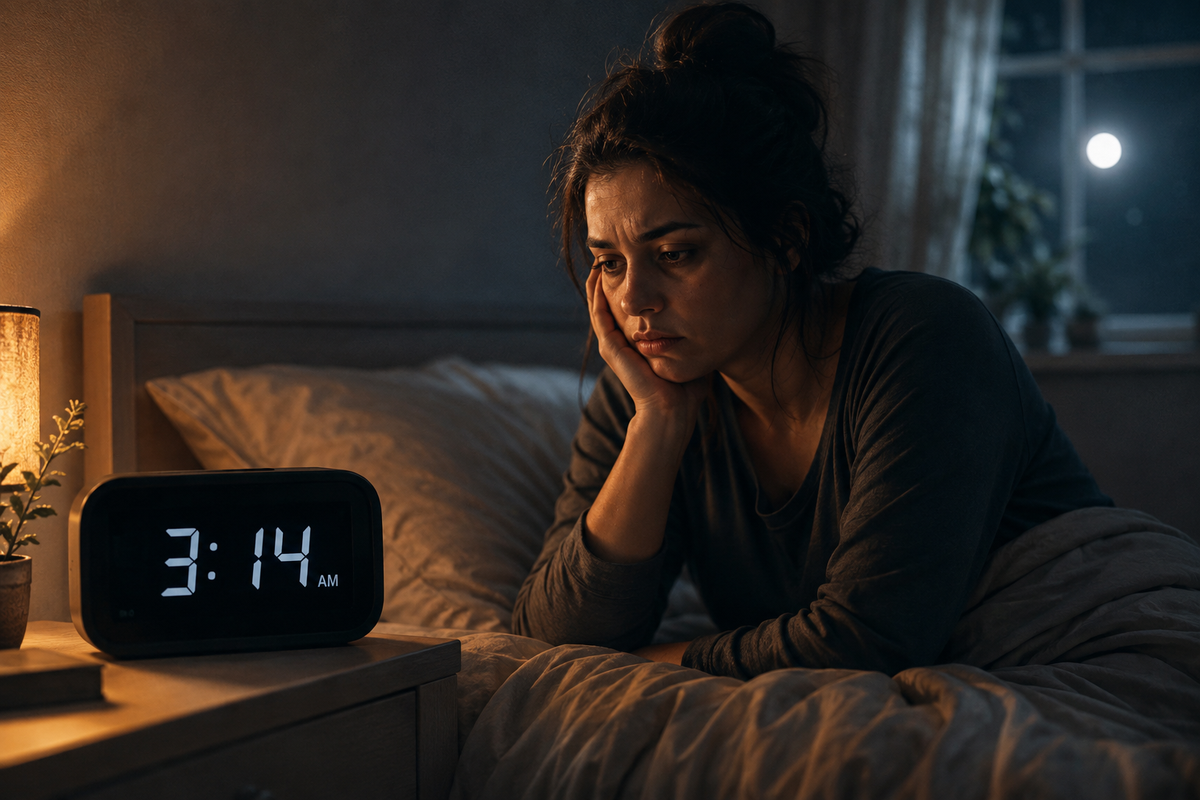
Because these cycles run on a fairly consistent internal clock, the "gap" between cycles tends to fall around the same time night after night — often in that 2–4AM window, a few hours after the deepest, slow-wave sleep of the night has passed.
Three things tend to determine whether you sleep through that gap or wake up at it:
- Circadian alignment — an internal clock that's out of sync makes the transition rockier
- Stress hormone timing — cortisol naturally starts rising in the early morning, and if it rises too early or too sharply, it can pull you out of sleep
- Depth of earlier sleep — if deep, slow-wave sleep was cut short earlier in the night, the later transitions are more fragile
What Doesn't Actually Fix It
This is why generic advice like "just don't check your phone" or a single melatonin gummy often falls flat for this specific problem — melatonin mostly affects how quickly you fall asleep, not what happens hours later when you're already asleep.
What Tends to Help
- Keeping a consistent wake time, even on weekends, to stabilize your circadian rhythm
- Cooling and darkening your bedroom (see our sleep habits guide)
- Addressing the underlying signaling with a formula built for full-night support rather than just sleep onset — this is exactly what we cover in our YU Sleep review
If You're Already Awake at 3AM Right Now
Read our guide on 7 ways to fall back asleep fast for what to actually do in the moment.